
English| EUR
Suggested for you
More currencies
Choose a language
Manaus occupies a unique position at the confluence of the Rio Negro and the Solimões River, deep within the Amazon Basin. The city itself is an urban center, but the rainforest begins at its edges. This guide explains the geography, clarifies what surrounds the city, and helps you understand how location shapes access to both urban infrastructure and primary jungle.
Quick answer
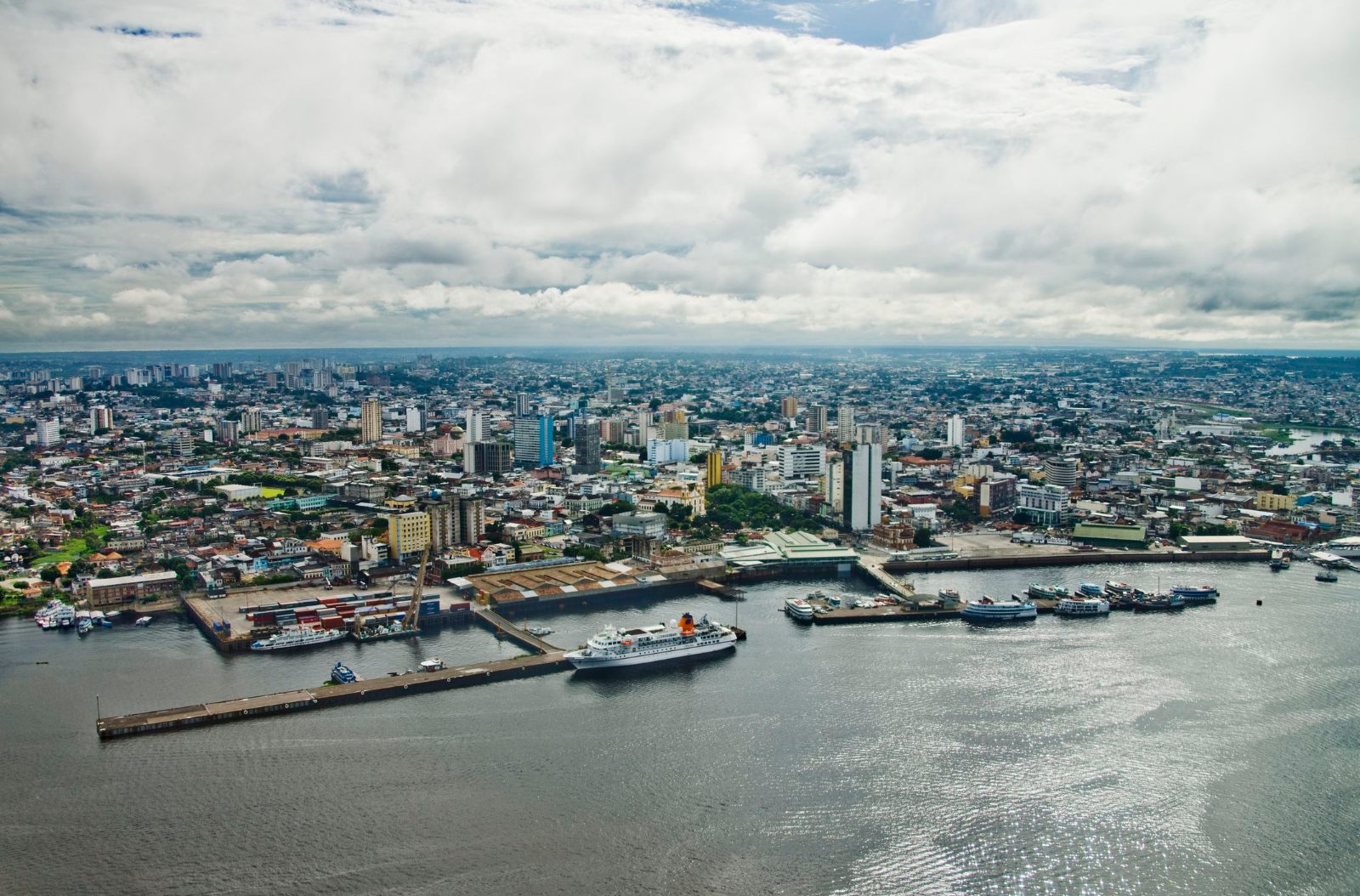
Manaus sits within the Amazon Basin and is surrounded by rainforest, but the city itself is an urban area with paved streets, modern infrastructure, and a population of over two million. The jungle begins immediately beyond the city limits. Visitors use Manaus as the gateway to reach primary rainforest via river or road, making it the logical starting point for Amazon expeditions while offering urban amenities that the forest interior does not.
The Rio Negro carries 28 million liters of water per second past the port of Manaus, and the forest canopy visible from the city's eastern districts stretches unbroken for thousands of kilometers. Yet the question of whether Manaus itself lies within the Amazon rainforest depends on how you define the boundary between urban development and primary jungle. Manaus is a city of concrete, asphalt, and steel erected in the heart of the Amazon Basin. The metropolitan area covers approximately 11,400 square kilometers, most of it cleared and developed. The urban core—home to the Teatro Amazonas, the Mercado Municipal Adolpho Lisboa, and the Zona Franca industrial district—functions like any regional capital, with traffic, hotels, restaurants, and cellular coverage. The surrounding municipality, however, includes large tracts of secondary forest and protected reserves, and the moment you leave the paved perimeter, the environment shifts. The Encontro das Águas, where the dark Rio Negro meets the muddy Solimões without immediately mixing, lies just 13 kilometers downstream from the city center. Anavilhanas National Park, a riverine archipelago of forested islands, begins 80 kilometers upriver. The Manaus location makes it the only major city positioned for direct access to both the central Amazon and the Negro basin. The distinction matters for practical reasons. Manaus provides the infrastructure—airports, fuel, provisions, licensed guides—that rainforest lodges and river expeditions require but cannot supply on their own. The city's free-trade zone, established in 1967, brought roads, electricity, and international logistics to a region that had none, and today every multi-day jungle itinerary either begins or ends at the Port of Manaus or the Eduardo Gomes International Airport. The urban footprint occupies a fraction of the municipality's total area, and the transition from city to forest is abrupt rather than gradual. Drive 30 minutes north on the AM-010 highway toward Presidente Figueiredo and you pass from streetlights into closed-canopy jungle. The forest does not encroach on Manaus—it surrounds it, and the city exists as a functional anomaly within it. For visitors, the Manaus rainforest relationship defines logistics. You will not walk from your hotel into primary jungle; you will board a boat or a vehicle. The city offers the last reliable ATM, pharmacy, and secure luggage storage before multi-day river travel. Tour operators based in Manaus coordinate transfers to lodges 60 to 150 kilometers away, where the forest remains intact and wildlife density increases. The urban environment is the threshold, not the destination, but it is a necessary one.
“The urban footprint occupies a fraction of the municipality's total area, and the transition from city to forest is abrupt rather than gradual.”
Manaus is situated in the heart of the Amazon biome and serves as the primary urban gateway to the Amazon River basin. Its geographic position makes it a critical logistical hub for expeditions into the surrounding rainforest.
The city is home to over 2.1 million people, making it the most populous city in the Amazon rainforest.
The Amazon River flows past the city, acting as the primary artery for the vast basin surrounding the urban center.
The city sits at a low elevation, typically ranging between 15 to 90 meters above sea level, depending on the river level.
Manaus is located approximately 1,500 kilometers inland from the Atlantic Ocean, accessible to large ocean-going vessels.
The confluence of the Negro and Solimões rivers near the city hosts an immense diversity of aquatic life.
The climate is characterized as tropical monsoon, maintaining consistent warmth and high humidity throughout the year.
Manaus is located in the heart of the Amazon rainforest and is primarily accessible by air or river. Most visitors arrive via Manaus International Airport (MAO) or by regional boat transport from neighboring states.
Flight to Manaus International Airport (MAO)
Regional river transport to Manaus Port
Authorized taxi from airport to city center
Bus lines 306 or 641 from airport to city
Plan your arrival for the best arrival window of 08:00–17:00 to ensure clear visibility for your transition into the city and access to local transport services.
The best time to visit Manaus depends on whether you prefer high water levels for jungle navigation or low water for beach access. Generally, the transition months of June and November offer a balance of manageable rainfall and river activity.
Humid, frequent rain, 24°C–31°C. Floating forests are accessible by boat during this period.
Hot, drier, 25°C–33°C. River levels drop, exposing sandy beaches along the Rio Negro.
—
Optimal for exploring historical sites and riverfront areas with lower pedestrian traffic.
Verdict: The best time to visit is during the shoulder months of June or November to experience moderate water levels and comfortable exploration conditions.
Manaus operates as a major urban center with city tourism services available throughout the week. Visitors have access to information and public facilities daily.
Everything you need to know about is manaus in the amazon rainforest
Yes, Manaus is located in the heart of the Amazon rainforest. It serves as the primary urban center and capital of the state of Amazonas in Brazil.
Travelers often arrive via air to explore this historic Brazilian metropolis. Once you arrive, you can use the city as a hub to reach the dense canopy and river systems nearby.
Guided excursions are the standard way to navigate the riverfront and jungle trails. These local tours allow visitors to experience the biodiversity surrounding the urban landscape without needing complex logistics.
Manaus is in the Amazon rainforest and welcomes visitors of all ages to explore its cultural sites and local parks. Many excursions cater to diverse groups, though checking specific age requirements for boat trips is advised.
There is no fee to enter the city of Manaus itself. Entrance to the capital is free, though specific historical landmarks or guided tours will have their own associated costs.
As a central hub, Manaus provides the infrastructure needed to begin a deep-jungle expedition. Many travelers arrive here before heading further into the protected reserves.
This common query reflects the city's unique position as a major urban center surrounded by immense nature. Understanding that it is both a city and a gateway helps visitors set realistic expectations for their logistics.